New publication: Pablo Gómez-Muñoz on ageism and space in Dune
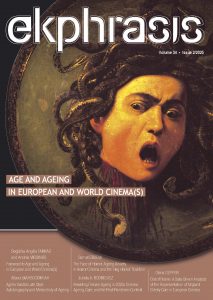 Team member Pablo Gómez-Muñoz has published a new article in Ekphrasis: Images, Cinema, Theory, Media (vol. 34, no. 2, 2025), a special issue on age and ageing in European and world cinemas.
The article, titled “The Messiah of Youth: Ageism, Power, and Space in Dune: Part One (2021) and Dune: Part Two (2024),” analyses how Denis Villeneuve’s two-part adaptation of Frank Herbert’s novel constructs its narrative around a systematic contrast between youth and old age. Drawing on cultural gerontology and film space theory, the article argues that the films adopt what Kathleen Woodward calls “the youthful structure of the look”: ageing characters — Baron Harkonnen (Stellan Skarsgård), Reverend Mother Mohiam (Charlotte Rampling), and the Emperor (Christopher Walken) — are consistently presented as out of touch, physically declining, and morally corrupt, while protagonist Paul Atreides (Timothée Chalamet) embodies adaptability, learning, and youthful prowess.
The article pays particular attention to the use of film space to reinforce these discourses: the “myopic” cinematographic effect that surrounds the Emperor, the shadows and veils that conceal Mohiam’s face, and the abject mud baths that mark the Baron’s ageing body. The final section qualifies this ageist reading by considering the role of Chani (Zendaya), whose perspective at the close of Part Two questions Paul’s messianic turn — though without fully reversing the film’s broader ageist logic.
The article is available open access at Ekphrasis.
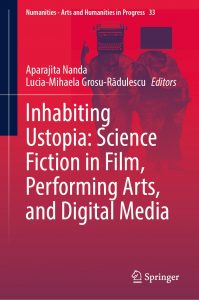 Team member Pablo Gómez-Muñoz has published a new chapter in the edited collection Inhabiting Ustopia: Science Fiction in Film, Performing Arts, and Digital Media (Springer, 2025), edited by Aparajita Nanda (Santa Clara University) and Lucia-Mihaela Grosu-Rădulescu (Bucharest University of Economic Studies).