• | |

    New publication: Luis Freijo on Ageing and Rural Space in Spanish Cinema — a quantitative analysis
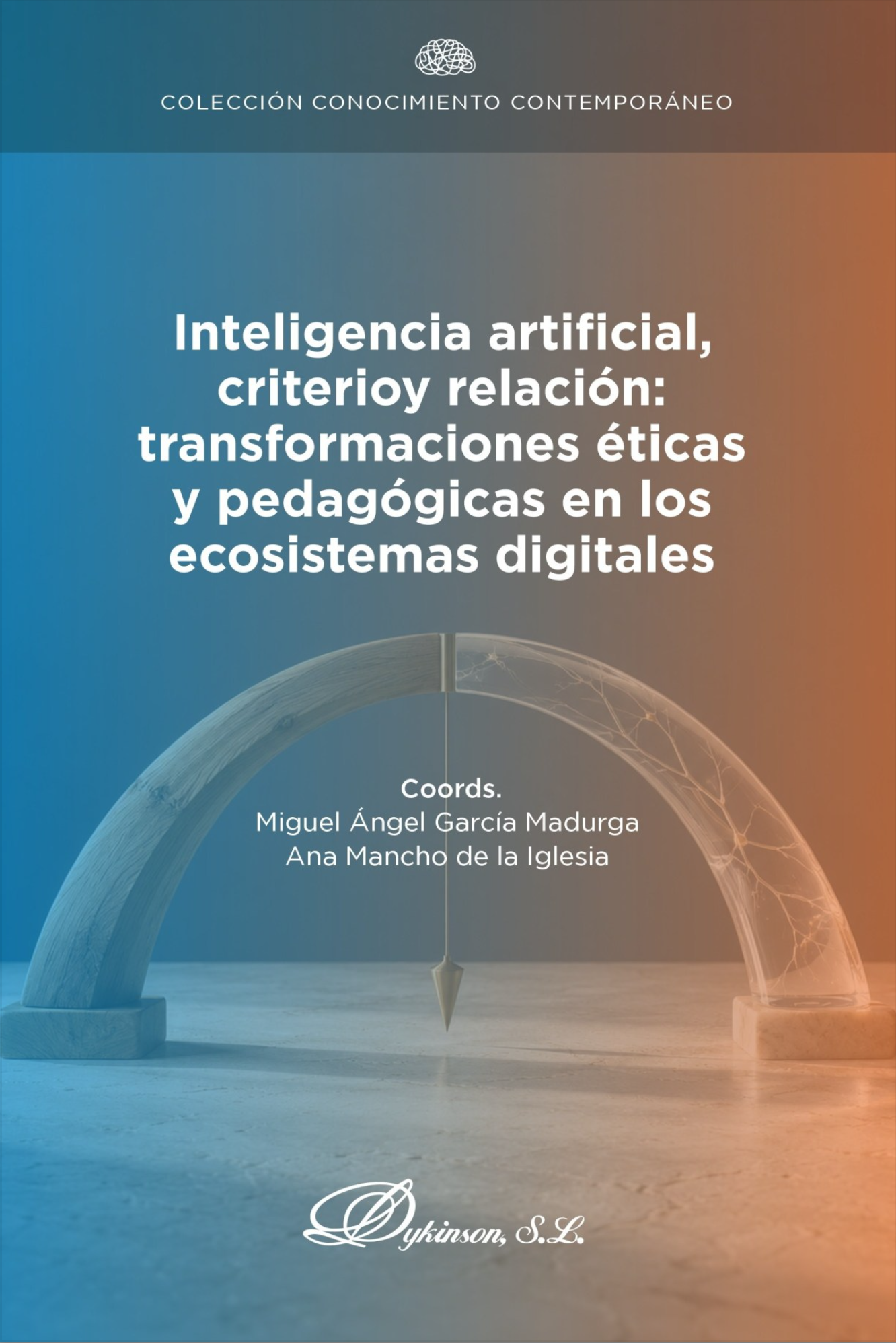
    Associate team member Luis Freijo (King’s College London) has published a new book chapter in the context of the AGE-C: Ageing and Gender in European Cinema project (2023–2027). The chapter, titled “Envejecimiento y mundo rural en el cine español contemporáneo: un acercamiento de datos cuantitativo,” is included in the volume Inteligencia Artificial, criterio y relación: Transformaciones éticas y pedagógicas en los ecosistemas digitales (Dykinson, 2025), edited by Miguel Ángel García Madurga and Ana Mancho de la Iglesia (Universidad de Zaragoza). The volume gathers contributions presented at the XI Congreso Internacional Comunicación e Información Digital, held at the Universidad de Zaragoza in October 2025.

    The chapter examines the representation of ageing in rural spaces in contemporary Spanish cinema, bringing together two topics of urgent public relevance in Spain: the ageing of the population and the depopulation and disproportionate ageing of rural areas, particularly in the centre of the country. Drawing on the AGE-C dataset, the chapter offers a quantitative analysis of ageing characters in rural settings, encompassing their diversity, and a thematic and generic reading of both fiction films and documentaries. The study concludes that Spanish cinema shows a growing concern with these two topics combined. The majority of ageing characters connected to rural space are heterosexual men between 60 and 75 years of age, with leisure and economic activities — particularly self-employed agricultural work — foregrounded, while vulnerable groups such as ageing women or people over 75 are less visible. Documentaries, by contrast, pay closer attention to themes of personal memory and caregiving.

    The chapter is available open access at Dykinson.
  • | |

    New publication: Pablo Gómez-Muñoz on ageism and space in Dune

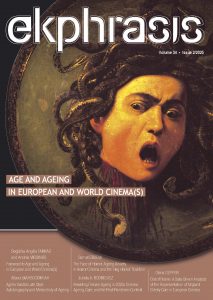
    Team member Pablo Gómez-Muñoz has published a new article in Ekphrasis: Images, Cinema, Theory, Media (vol. 34, no. 2, 2025), a special issue on age and ageing in European and world cinemas.
    The article, titled “The Messiah of Youth: Ageism, Power, and Space in Dune: Part One (2021) and Dune: Part Two (2024),” analyses how Denis Villeneuve’s two-part adaptation of Frank Herbert’s novel constructs its narrative around a systematic contrast between youth and old age. Drawing on cultural gerontology and film space theory, the article argues that the films adopt what Kathleen Woodward calls “the youthful structure of the look”: ageing characters — Baron Harkonnen (Stellan Skarsgård), Reverend Mother Mohiam (Charlotte Rampling), and the Emperor (Christopher Walken) — are consistently presented as out of touch, physically declining, and morally corrupt, while protagonist Paul Atreides (Timothée Chalamet) embodies adaptability, learning, and youthful prowess.

    The article pays particular attention to the use of film space to reinforce these discourses: the “myopic” cinematographic effect that surrounds the Emperor, the shadows and veils that conceal Mohiam’s face, and the abject mud baths that mark the Baron’s ageing body. The final section qualifies this ageist reading by considering the role of Chani (Zendaya), whose perspective at the close of Part Two questions Paul’s messianic turn — though without fully reversing the film’s broader ageist logic.

    The article is available open access at Ekphrasis.

  • | |

    New publication: Pablo Gómez-Muñoz on Years and Years

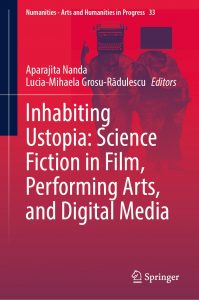
    Team member Pablo Gómez-Muñoz has published a new chapter in the edited collection Inhabiting Ustopia: Science Fiction in Film, Performing Arts, and Digital Media (Springer, 2025), edited by Aparajita Nanda (Santa Clara University) and Lucia-Mihaela Grosu-Rădulescu (Bucharest University of Economic Studies).

    The volume offers a fresh conceptual framework for discussing science fiction across film, performing arts, and digital media, drawing on Margaret Atwood’s concept of “ustopia” — a space that is neither purely utopian nor dystopian — to address topics such as transhumanism, artificial intelligence, digital subjectivities, and the ethics of speculative world-building. The book brings together contributors from Japan, Romania, India, Spain, Ireland, and the USA, and spans a wide range of media forms including film, theatre, opera, videogames, and immersive platforms.

    Pablo’s chapter, titled “Fast-Forward to the Future: Socioeconomic Change and Spatial Reconfigurations in Years and Years (Russell T. Davies, 2019),” examines how the BBC/HBO miniseries blends utopian and dystopian impulses through its depiction of neoliberal acceleration and spatial transformation. Drawing on theories of accelerationism and transnational space, the chapter analyses how Years and Years uses montage, crosscutting, and soundtrack to convey a sense of dizzying socioeconomic change, while keeping the experience of a Ukrainian gay refugee at the narrative’s centre. The chapter also reflects on the series’ attempt — and its limitations — to infuse a near-future dystopia with moments of collective hope.

    The chapter is available on SpringerLink. The full volume can be accessed here.