• Knowledge transfer: Halloween film literacy workshop at IES Pablo Gargallo

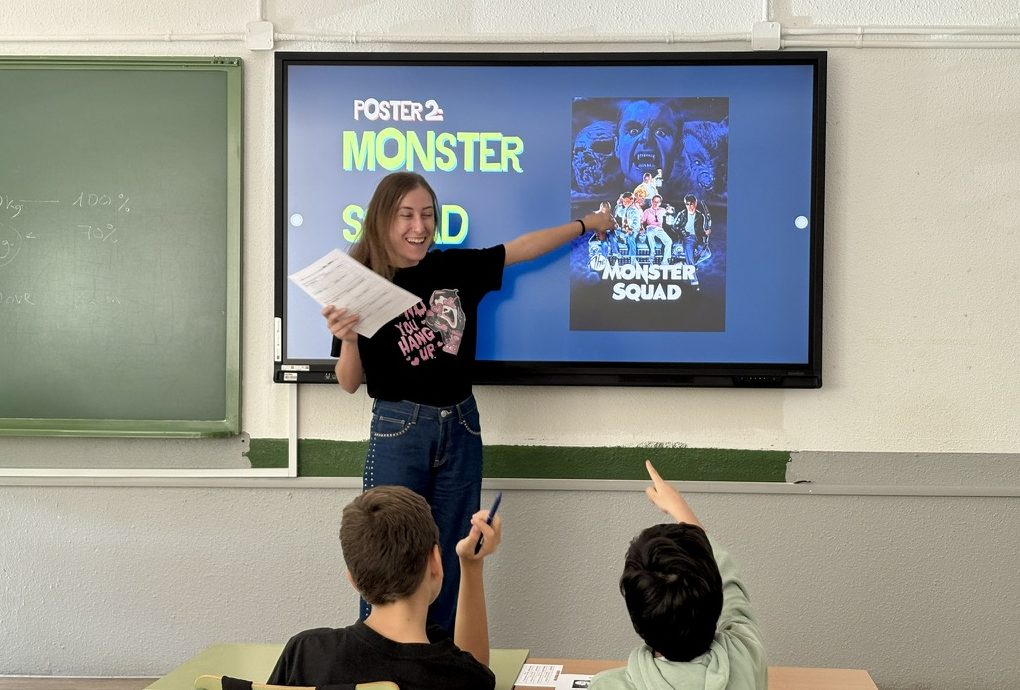
    On 28 October 2026, team members Victoria Santamaría Ibor and Andrea Regueira Martín ran a Halloween-themed audiovisual literacy workshop with first-year ESO students at IES Pablo Gargallo in Zaragoza. Delivered entirely in English, the session was designed to help students improve their English alongside their film literacy. Students began by analysing horror film posters and clips, looking at how images, framing, and sound work together to build fear and expectation.

    They then applied what they had learned to their own work, drafting an original scary scene in English and deciding which audiovisual elements it would include. One group imagined an explorer who enters an abandoned train station in the middle of nowhere, only for a ghost train to arrive and unload ghosts, zombies, and monsters. The scene would include a jump scare and its gloomy mood would be enhanced through the use of dark colours, decaying props and a scary soundtrack and sound effects, including a scream. The workshop is part of the group’s film literacy activities in local schools.

    Students analysing horror film posters during the workshop.
  • Knowledge transfer: European Researchers’ Night

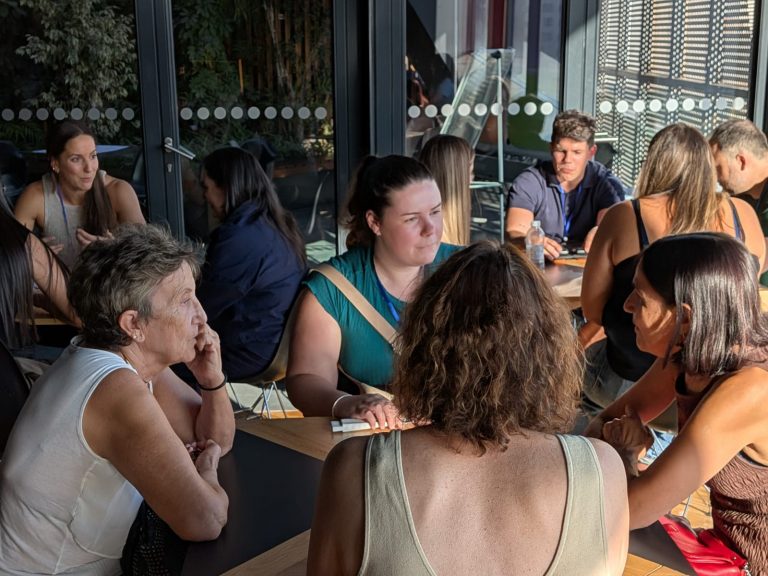
    On 25 September 2026, predoctoral researchers Elena Velilla Gonzalvo and Carlota Fernández Espiago participated in La Noche de la Investigación (European Researchers’ Night) at CaixaForum Zaragoza, an event aimed at bringing research and researchers closer to the general public.

    As part of the programme, they took part in the “Speed Dating” activity, an interactive format in which members of the public moved between different tables and had the opportunity to ask researchers questions about their work. The activity provided an informal and engaging space for communicating research beyond the academic context, encouraging dialogue between researchers and citizens and contributing to the transfer of academic knowledge.

    Speed dating event
    Doctoral candidate Elena Velilla at the speed dating event
  • Knowledge transfer: María del Mar Azcona interviewed in Educar la mirada

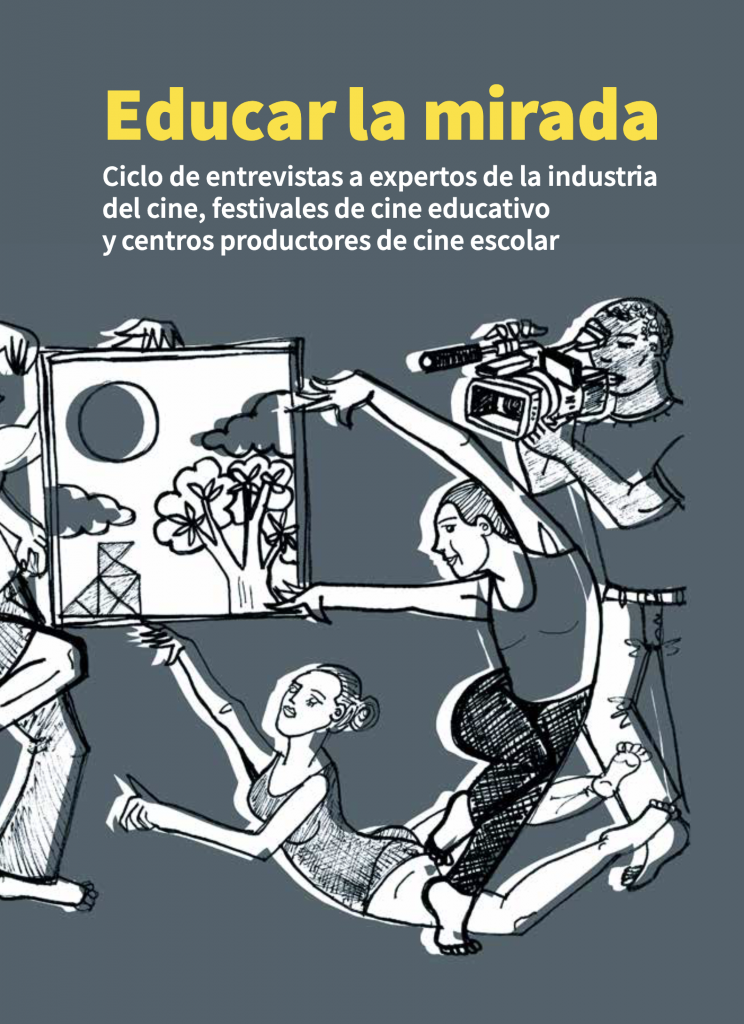
    María del Mar Azcona, IP of the project, has been interviewed for the book Educar la mirada: Ciclo de entrevistas a expertos de la industria del cine, festivales de cine educativo y centros productores de cine escolar, coordinated by Fernando Yarza.

    The interviews were conducted in the framework of the PISOC project “Educa-acción! Cine y Educación para la Transformación Social”, developed around the first and second editions of the Festival de Cine Escolar of the Facultad de Educación of the Universidad de Zaragoza. The volume brings together interviews with experts from the film industry, educational film festivals, and schools involved in audiovisual production, all united by a commitment to film literacy as a tool for critical citizenship. Other contributors include Miguel Ángel Lamata (screenwriter and film director), José Manuel Herráiz (producer, director and screenwriter, Albella Audiovisual), Ángel Gonzalvo (coordinator of the Un Día de Cine programme, Government of Aragón), and representatives of educational film festivals including Ecozine, Cine y Salud, Fescila, and the International Youth Film Festival Plasencia Encorto, among others.

    In her interview, Azcona reflects on how cinema functions as an ideological vehicle rather than mere entertainment, arguing that learning to read film is inseparable from developing critical thinking. She describes the four film analysis courses taught in the English Studies degree at the Universidad de Zaragoza and emphasises that audiovisual literacy equips students to identify and question the ideological discourses embedded in the images that surround them daily. On the role of the university beyond its walls, she highlights the research project’s ongoing outreach activities in schools, including sessions exploring the sexualised representation of female characters in animation, designed both to raise awareness among students and to provide teachers with tools they can replicate independently. Asked about the evolution of her students over twenty years of teaching, she notes that concepts like patriarchy are now part of their everyday vocabulary — though the deeper analytical work of reading texts critically, she argues, remains as challenging as ever.

    “From the very first day we insist that cinema, as part of popular culture, not only reflects the society we live in, but also helps to create it. Films represent patterns that then become part of us and of the way we behave in response to some of the things that happen to us. Learning to read images and audiovisual texts teaches us to identify key elements of mise-en-scène, framing, editing and sound — and at the same time to reflect on their narrative and ideological implications. In our courses, we always stress that in a film, what is not said and not shown is just as important as what is.” — María del Mar Azcona

    The book is available open access at festivalecozine.com.
  • Knowledge transfer: Film literacy workshop at Colegio Santa Ana

    On 22 May 2026, team members Andrea Regueira, Claudia Aguas, and Carmen Navarro organised an audiovisual literacy workshop with first-year Bachillerato students at Colegio Santa Ana in Zaragoza. Students explored and analysed scenes from Billy Elliot (Stephen Daldry, 2000), examining key elements of film language including camera angles, framing, sound design, mise-en-scène, and costume to reflect on issues of class, gender and parental expectations.

    The workshop is part of the group’s ongoing programme of film literacy activities in local schools, which combines the teaching of English as a foreign language with the development of students’ critical engagement with film and media.

    Colegio Santa Ana shared their experience on their Instagram account:

    “Nos han enseñado a analizar una escena de la película Billy Elliot y hemos aprendido que nada se deja al azar: movimientos de cámara, posición, puesta en escena, vestuario… todo tiene un significado y un propósito.”
    — Colegio Santa Ana